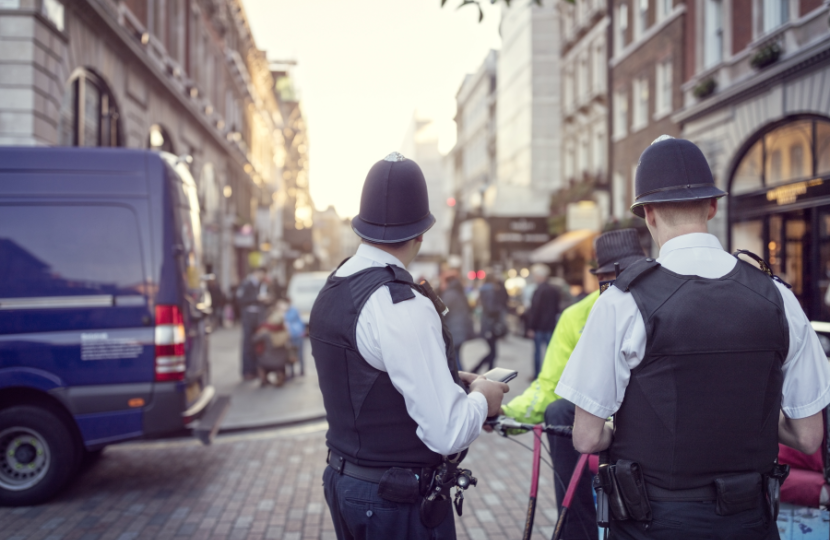
Westminster's Conservative administration has written to the Labour Mayor of London, Sadiq Khan, demanding a policing settlement that matches the reality of life in our city. Cllr Caroline Sargent, Deputy Leader and Cabinet Member for Enforcement, and Cllr Festus Akinbusoye, Deputy Cabinet Member for Enforcement, have told the Mayor that neighbourhood policing in Westminster is being hollowed out while residents pay the price.
Residents told us at the election that they wanted safe streets, a clean city and real action. That is what we are delivering, and it is why we are not prepared to stay quiet while the officers our neighbourhoods depend on are pulled away week after week.
Westminster has the highest crime rate in the country per head of population, alongside protests, state and civic events, embassies, the Royal Parks and a daytime population unlike anywhere else in Britain. Policing this city is a national responsibility as much as a local one. Yet as the letter to the Mayor sets out, local people are the ones losing out:
"While police numbers may appear to have increased on paper, this does not reflect the reality experienced by many communities. Local officers are frequently drawn away to support protests, civic events, embassy policing, Royal Parks activity and other demands that are exceptional to Westminster."
North Westminster has been let down
The letter is blunt about the anger felt in north Westminster after a series of tragic deaths, and about what residents have said directly to their councillors:
"These communities have made clear that they feel unsafe, under-served and unheard; they are scared and are calling out for better policing. Westminster's neighbourhoods and diverse communities should not be disadvantaged because of the borough's wider London and national responsibilities."
That last line is the heart of our argument. Westminster carries burdens that belong to the whole country. Our residents should not have their local police officers taken away as the price of it.
Schools policing has quietly disappeared
Parents were promised named officers who would be visible and known in their school communities. In practice, the letter warns, those officers are "now frequently abstracted", with the result being "reduced engagement with young people, weaker preventative work and growing concern about safety around schools and youth events".
Some secondary schools have cancelled end-of-year events altogether because there was no local police support to manage them safely. That is not a statistic. That is children in Westminster missing out because the Mayor's policing model is not working.
Enforcement cannot be done by the council alone
Westminster is putting more than £8 million of its own money into supporting vulnerable people, including rough sleeping outreach and accommodation. The Conservative administration is using every power the council has, from tackling street anti-social behaviour to going after the organised networks behind drug supply, exploitation and begging. But as the letter makes clear:
"Without sufficient policing support, these challenges will continue to escalate."
In the last month alone, two people known to council services died on our streets in very sad circumstances. The letter says plainly that those deaths "could, and should, have been prevented."
What we are asking the Mayor to do
- Resource allocation. A review for Westminster, with either an immediate uplift in police numbers or effective ringfencing of neighbourhood resources from national and local abstractions.
- Schools policing. A review of whether the promised model has been delivered, and whether removing protected schools policing should be reconsidered.
- Royal Parks and embassies. A clearer plan so that demands which should be resourced separately stop eating into local neighbourhood policing.
- Streets and organised crime. A strengthened approach to rough sleeping, tents, street anti-social behaviour and organised crime, with better use of the powers already available.
- Offender management. Joint work with the Metropolitan Police and Ministry of Justice, particularly on persistent offenders who breach court orders or keep causing harm while waiting years for a court date.
Our commitment to residents
We want to work with the Mayor, not shout past him. The letter offers exactly that, seeking "urgent commitment to review the current position and work with us on a practical plan that reflects Westminster's unique role, protects our neighbourhoods, and delivers safer outcomes for residents, businesses and visitors."
The test now is simple. Sadiq Khan is responsible for policing in London. Westminster residents will judge him on whether officers are back on their streets, in their schools and in their neighbourhoods, or whether this letter is met with the same silence they have had for too long.
We will keep reporting back on his response.
View the letter here
Dear Sadiq,
Policing pressures in Westminster
Given your responsibility for policing and crime in London, we are writing, as Deputy Leader and Cabinet Member for Enforcement and Deputy Cabinet Member for Enforcement, to raise serious concerns about the policing pressures facing Westminster and the impact these are having on our residents, businesses and visitors. We are certain that you will share our concerns.
Westminster’s position at the heart of national democracy, combined with its major events, protests, visitor economy, high daytime population and areas of significant vulnerability, places exceptional demands on local services and partners. Crime in Westminster is among the highest in the country per head of population, and its effects are felt not only by residents but also by those who work in and visit the city each day. Maintaining effective policing is therefore critical to achieving our shared mission for safety and economic growth.
We recognise the difficult choices facing the Metropolitan Police and we value the commitment of our excellent Police Officers and PCSOs working in Westminster. However, we are increasingly concerned that neighbourhood policing is being undermined by resource pressures, abstractions and the loss of specialist teams. While police numbers may appear to have increased on paper, this does not reflect the reality experienced by many communities. Local officers are frequently drawn away to support protests, civic events, embassy policing, Royal Parks activity and other demands that are exceptional to Westminster.
This is having a direct impact on residents. In parts of north Westminster, where communities already report low police visibility there is deep concern following recent serious incidents. The anger and frustration with policing has been made clear by our communities in public engagement meetings following the tragic death of a young man that happened only a short walk from another senseless murder in the same community only weeks before, two streets over from where another sad loss took place less than two years ago. These communities have made clear that they feel unsafe, under-served and unheard, they are scared and are calling out for better policing. Westminster’s neighbourhoods and diverse communities should not be disadvantaged because of the borough’s wider London and national responsibilities.
We are also concerned about the reduction or disbanding of specialist provision, including Royal Parks, anti-social behaviour, schools and youth engagement teams. The loss of protected schools policing is particularly troubling. Schools were promised named officers who would be visible and known to their communities, but those officers are now frequently abstracted. The result is reduced engagement with young people, weaker preventative work and growing concern about safety around schools and youth events with end of year events being cancelled by secondary schools due to concerns about the safe management of young people in the context of no local police support. Similarly, MO6 has historically held responsibility for policing at the Iranian Embassy, now this is mostly managed by the borough resource.
The same pressures are evident in our response to rough sleeping, street-based anti-social behaviour and organised criminality. Westminster invests over £8 million of its own funds to support services for vulnerable people, including rough sleeping outreach and accommodation, but the Council cannot address these issues alone. Visible street ASB, drug supply, exploitation, begging and volume crime are causing harm to vulnerable individuals, residents and businesses. Within the last month, two individuals known to council services passed away in very sad circumstances on our streets. These deaths could, and should, have been prevented. These challenges are further complicated by organised criminal networks involved in drug supply, criminal exploitation, begging and volume crime, alongside an entrenched street population involved in drug dealing, drug use and anti-social behaviour. Without sufficient policing support, these challenges will continue to escalate.
Westminster urgently needs a policing settlement that reflects the scale and complexity of the demands placed on the city. We are therefore asking you to work with Westminster City Council and the Metropolitan Police to agree immediate and longer-term action, including:
1. A review of resource allocation for Westminster, with either an immediate uplift in police numbers or effective ringfencing of existing neighbourhood resources from both national and local abstractions.
2. A review of schools policing, to assess whether the promised model has been delivered, whether named officers are visible and active in school communities, and whether the decision to remove protected schools policing should be reconsidered.
3. A clearer plan for policing the Royal Parks and embassy-related pressures, so that local neighbourhood policing is not disproportionately affected by demands that should be resourced separately.
4. A strengthened approach to rough sleeping, tents, street ASB and organised crime, including clearer operating procedures and better use of available powers to protect vulnerable people and local communities.
5. Joint work with the Metropolitan Police and Ministry of Justice on offender management, particularly where persistent offenders breach court orders or continue to cause harm while awaiting court dates far into the future. The Council has acted where it can, including investing in services, supporting prevention activity and working closely with local police teams and partners. We remain committed to constructive partnership with your office and the Metropolitan Police. We also want to explore how technology, data and engagement can help target resources more effectively.
However, these efforts will not be enough unless Westminster has sufficient, protected policing capacity to meet the demands placed on it. Community crime fighting is central to the New Met for London strategy, but trust and confidence will only be rebuilt if residents can see and feel a visible, responsive and consistent policing presence in their neighbourhoods.
We would welcome your urgent commitment to review the current position and work with us on a practical plan that reflects Westminster’s unique role, protects our neighbourhoods, and delivers safer outcomes for residents, businesses and visitors.
Yours sincerely,
Cllr Caroline Sargent, Deputy Leader and Cabinet Member for Enforcement, Ward member for Abbey Road
Cllr Festus Akinbusoye, Deputy Cabinet Member for Enforcement, Ward member for Abbey Road