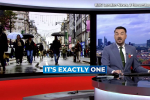
A week after Oxford Street was pedestrianised between Oxford Circus and Selfridges, Cllr Tim Barnes, Deputy Leader of Westminster City Council, joined BBC Radio London's Nisha Patel on the street to give his verdict on the first seven days.
An ambulance kept waiting
Tim said his inbox had been "really busy with people who are worried about cyclists on the pavement and about some of the access issues", and described what he had seen that morning: "There was an ambulance that came up at Oxford Circus, was kept for nearly two minutes waiting until a marshal got to them, and then they were told to go and find another way along the street. This isn't the sort of level of organisation that we'd been hoping for, and is an example of what happens when a scheme like this is rushed."
E-bikes still on the street
"There's no doubt about the fact that some of the problems that we're seeing are teething issues, and there'll be an improvement in the signage, improvements in marshalling," Tim said. But riders on hired e-bikes are charged more for longer journeys, "so they're looking for the shortest possible route", and that "is unfair on many of the pedestrians and the other people who are trying to use the street and just get around". TfL says geofencing will keep hired e-bikes off the street, "but that's not quite what we've seen this morning".
Who has been left behind
Tim welcomed the work for blind and partially sighted people, though "in my view, that should've happened already". The bigger concern is people who use wheelchairs or have mobility issues: "We have no step-free access from Oxford Circus. The way that many of those people used to find their way to Oxford Street was in the buses or taxis, the very transport that's been taken off the street." The result, he said, is "a street that works for many people who are able-bodied" while "a lot of minority groups have been forgotten and pushed to the side", and the council will "continue to campaign for some form of remediation".
£150 million: at what price?
With £150 million being spent on the street, footfall and business should go up: "if we don't see substantial increases, it's really going to be an even bigger failure". The traffic that used Oxford Street "wasn't optional traffic". Cars, buses, delivery and service vehicles have gone into the streets around, and "there are many businesses that now have permanent traffic queues over the last week outside of their businesses". "It's the overall impact on London we should be worried about, not just the bit that tourists see walking up and down Oxford Street."
The nation's high street?
Tim also asked what the street is becoming, with the double-decker buses and black cabs, "known around the world as a symbol of London", removed and big British brands like HMV leaving: "How British is it going to be? How different is it going to be?"
Making the best of it
Westminster sits on the board that shapes Oxford Street's future, and Tim was clear about the council's role now: "We're not here to try and oppose something that's already happened. We're trying to make the best of what's here." That means sticking up for disabled people and those with mobility issues, the retailers losing out and residents, "to basically make sure that the minorities in all of this aren't forgotten about, and that the good is as good as it can be and that the bad is as little as it can be."
Tell us what matters to you: westm.news/listening